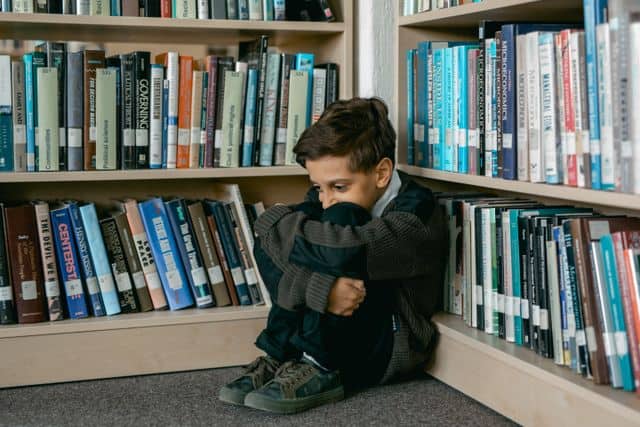
Working in a school, especially in a SEND role, gives you a front row seat to a growing crisis. We see the children who are desperate to do well but physically cannot manage the sensory and social demands of a mainstream classroom. And we see the parents, exhausted and tearful in meetings, completely broken by the daily battle of the morning school run.
When a child is experiencing Emotionally Based School Avoidance (EBSA), the systemic focus is usually on getting them back into the building. But new research commissioned by Minerva Virtual Academy (MVA) shows that school refusal is not just an attendance issue; it is a full blown crisis for the entire family.
The Reality Behind Closed Doors
Minerva Virtual Academy recently surveyed 2,000 UK parents dealing with EBSA. The findings confirm what many of us working in SEND already know: the lack of timely support is having a catastrophic impact on parental mental health and family finances.
The survey revealed the immense pressure placed on parents:
? 28% of parents affected by school refusal said weekday mornings had become the most distressing part of family life.
? Almost a quarter of parents said the experience had made them feel as though they were failing.
? 21% of mothers reported that their mental health had deteriorated severely, and 24% experienced anxiety or panic attacks.
The Waiting Game and Financial Strain
We all know that waiting lists for assessments and specialist support are agonisingly long. The survey found that 15% of parents were waiting for a formal diagnosis for their child, and a further 14% had been waiting for more than two years.
While the system stalls, parents are forced to step away from their careers to keep their children safe at home. The financial hit is staggering. Across all the families surveyed, 42% estimated that their household had lost up to £10,000 as a result of their child’s attendance problems. The impact on fathers is particularly severe, with more than a third reducing their working hours and nearly one in three leaving work altogether.
Bridging the Gap with Alternative Options
As educators, we know that mainstream schooling is simply not the right fit for every single child. Yet, almost 90% of families surveyed said they had not been given clear guidance about alternative education options.
When the traditional classroom is causing trauma, we need to be transparent with parents about flexible alternatives. Traditional home education is wonderful for some, but it requires parents to take on the role of a full-time teacher, which is often impossible for families already facing financial strain.
For parents who want their child to receive structured teaching and pastoral support without the sensory overload of a physical classroom, an online school provides another route. At Minerva Virtual Academy, a structured online secondary school combines learning from home with live lessons, independent study, and individual mentoring.
For a neurodivergent or highly anxious young person, learning in a calm, controlled environment can be completely life changing. It allows them to re engage with education on their own terms, while giving exhausted parents the space to finally breathe again.
About the author
Hugh Viney is the founder of Minerva Virtual Academy, a Department for Education-accredited
online school for pupils aged 11 to 18. The school combines online lessons and self-paced
study with weekly one-to-one mentoring and wellbeing support.