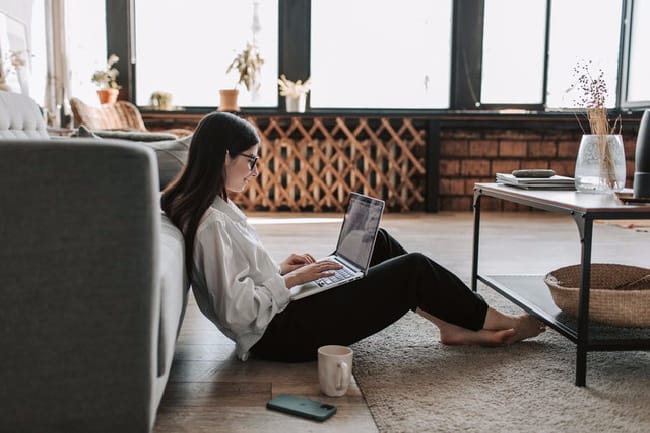
Working from home can be advantageous in many ways, perhaps especially for parents, but it can also offer a number of physical, emotional, and social difficulties. Wellness basics such as eating a healthy diet and getting regular exercise are among the health issues that people who work from home can often have.
However, it is also critical to address the psychological and social difficulties of remote working, such as loneliness and blurring boundaries between a person’s professional and personal life. In this blog, we’ll look at ways to stay healthy when working from home.
Eat A Healthy Diet
A healthy diet promotes nutritious foods such as fruits, vegetables, low-fat products (including dairy), and whole grains. It also contains eggs, beans, nuts, fish, poultry, and lean meat, while minimising meals rich in sugar and salt. A healthy diet also restricts meals with high levels of saturated fat, such as fatty cuts of red meat, and trans-fat foods, such as processed foods. It’s also a good idea not to skip any meals, no matter how busy you are. Skipping meals will negatively affect your metabolism, making it harder to burn off calories and easier to put on weight, which is terrible for your overall health.
People who have few distractions at home may be more conscious of hunger than they would be at work. Or they might get bored without others to talk to, and that’s when the idea of eating comes to them. This can be a problem as it can lead to extra snacks that they wouldn’t normally eat. To prevent munching on crisps and chocolate, if you know you do have an issue with requiring extra snacks, make sure they are healthy ones such as apples. You’ll still satisfy your hunger cravings, but you’ll do it healthily.
Keep Hydrated
Drinking adequate amounts of water throughout the day is critical for avoiding dehydration, which can cause constipation, mood changes, lower productivity, and fatigue, among other things. Although water is the healthiest beverage option, modest quantities of coffee and tea are also okay, as long as you drink water in between cups. You should avoid sugary drinks such as sodas, energy drinks, and fruit drinks altogether. These will dehydrate you more quickly – as will alcohol – and leave you feeling unwell.
If you don’t drink enough while you’re working, by the time you finish and step away from your desk for the day, you won’t have enough energy to enjoy time with your family, to go out with friends, or even to feel like cooking a nutritious meal and this means that you might fall into the habit of processed food or takeaway just for the convenience. As we’ve mentioned above, that’s not a good thing.
Schedule Regular Exercise
Physical and psychological advantages will definitely be obtained through exercise. The problem is that, although we all know how important exercise is, and we know that we should be trying to get at least thirty minutes of exercise a day, when we’re working, it might be hard to find the time.
Yet when you’re working from home, you actually do have a lot more time than if you commuted to work. Think of the time it would normally take you to get to the office; could you do your exercise then instead? It might mean not having a lie-in and getting up at the same time as you would if you were leaving the house to go to work, but by doing your exercise first thing in the morning, not only do you not have to worry about it for the rest of the day, but you’ll also be a lot more energised when you are working. You’ll be more productive, you’ll be more focused, and you’ll feel healthier. Add to this the fact that your breakfast will be more easily digested and the nutrients used in the right way, and you can see why exercising should always be the first thing you do every day before work.
In addition to exercise programmes, integrating physical activity throughout the workplace and throughout the day is a great idea. The more exercise you can do, the better for your health. People can accomplish this by walking around during phone conversations or setting up calendar reminders to perform a few push-ups near their desk at regular intervals. Using a standing desk and other useful tools that will allow you to stand more often (sitting for many hours at a time is bad for your heart and circulation will also help a considerable amount).
Prevent Back Pain
Back pain is something that many office workers suffer from, whether they work from home or not, but you can avoid this by setting up a home office in a manner that encourages healthy posture. It’s the posture of a person that causes these problems; leaning over a desk that’s too low because you’re sitting in a chair that’s too high (and vice versa) is going to take its toll on your spine. This is why you need to have a great office chair.
The ideal office chair has armrests and a seat height that enables the feet to rest flat on the floor. The hips and knees of the person should be at or slightly over a 90-degree angle. The office workers may choose to invest in a chair that supports the lower back’s curvature as well, as this will be more comfortable.
The computer display should be placed an arm’s length away, with the top of the monitor at or below eye level. You can reduce eye strain by increasing the text size as needed or using special blue screen glasses.
Maintain A Work-Life Balance
When people work from home, the boundaries between their professional and personal lives can easily and often get blurred. As a result, it’s beneficial to establish proper boundaries, including, if feasible, having a separate home office with its own door.
It’s also a good idea for individuals who are remote workers to set time limits in the form of a daily work schedule. This should include a 30-minute lunch break, a 15-minute morning break, and a 15-minute afternoon break.
People can reinforce the divide between work and family life by ignoring work after office hours. Some studies believe that psychologically disconnecting from work and concentrating on relaxation at the end of a workday is important. If you wouldn’t be checking your emails or writing up reports after work if you worked in an office you had to commute to, don’t do it just because your laptop is easier to get to, and you think you can get ahead of yourself. All you’ll do is miss out on ‘real life’ and get stressed, potentially making yourself ill, and certainly making you begrudge your job.
Stick To A Daily Routine
Routines are something that human beings thrive on. We need to live in a set pattern in order to be as productive as possible. Of course, some people are more able to cope with change and spontaneity than others, but in general, routines are good.
With this in mind, try to keep a regular routine during and after work as much of the time as possible. If you don’t, stress can creep in, and you might start to worry that you’re not going to get your work done in time, then you’ll begin working later, and any routines – including your sleeping routine – will fall apart.
Regarding your sleep, most adults need around seven hours of good sleep a night. Some need more, some need less, but this is the average. Have a set bedtime and wake up time that you stick to even on weekends, and you’ll feel healthier because of it.
Make Personal Connections
Working from home can, obviously, make it more difficult to connect with coworkers on a personal level. When individuals work together in a shared space, they socialise; this is known as the water-cooler effect.
People who work remotely, on the other hand, are often alone the majority of the time, and socialising does not occur as naturally. It’s much more challenging because you can’t simply walk over to someone else’s desk for a chat or meet someone for lunch if they live a long-distance away.
People who live with relatives or roommates can prevent loneliness by making the most of chances to spend time with them. Household members can participate in activities such as sharing meals, playing games, or watching a movie together. Or you might ask a loved one to go out for a walk with you, incorporating exercise with the chance to socialise. Plus, going out once or twice a week to see friends, or using specialist collaboration tools to connect with co-workers, will give you even more chances to make personal connections.
If you’re experiencing extreme emotions of stress or loneliness, you should consider speaking with a therapist. They will be able to give you the right advice and answer your questions, helping you to work out just how to create the right work-life balance and stay healthy while working from home.
Collaborative post