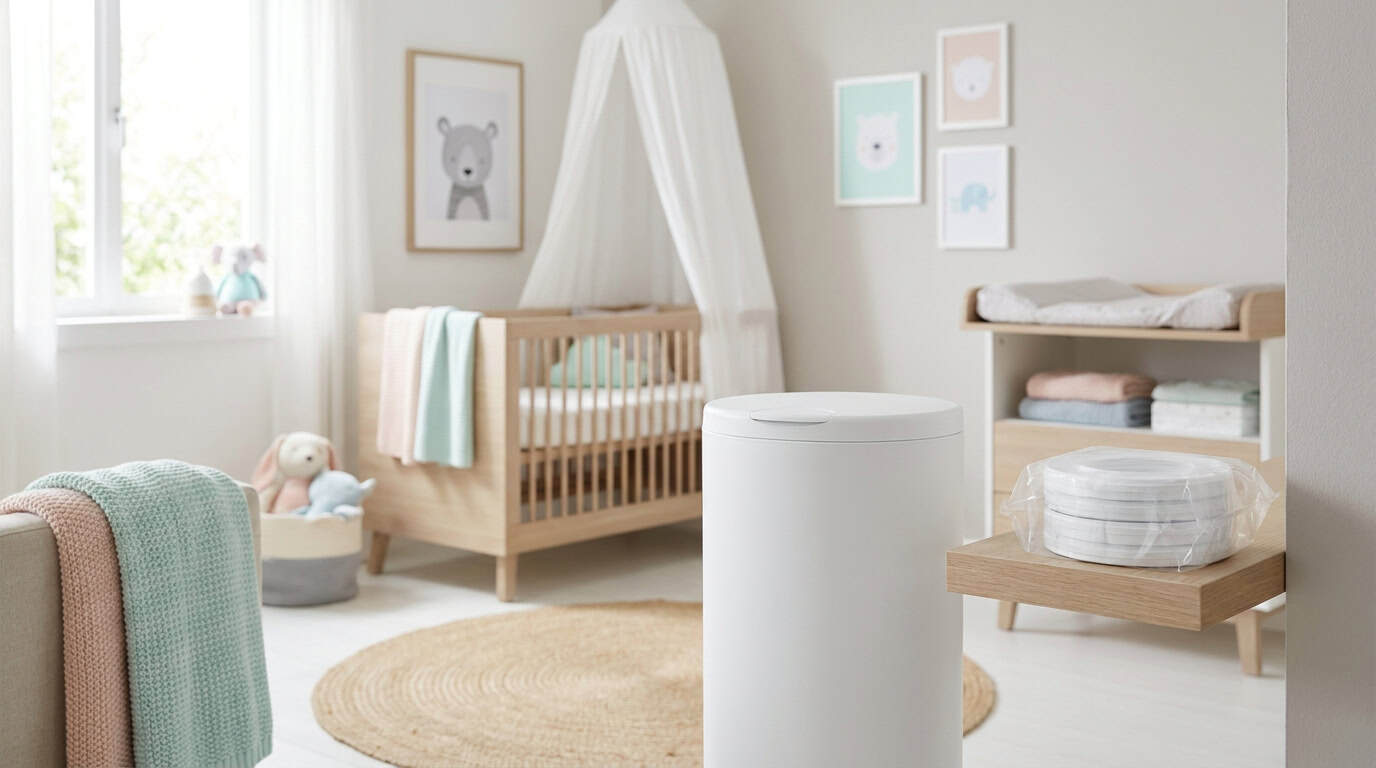
Diaper pail refill bags keep odors locked inside the pail and make disposal simple, but not all refills perform the same way. The right refill bag depends on your pail model, how often you change diapers, and whether scent or material matters to you. This guide breaks down the factors that separate a reliable refill from a wasteful one, so you can stock up with confidence.
What Makes a Good Diaper Pail Refill Bag?
A diaper pail refill bag does more than hold dirty diapers. It acts as the primary barrier between soiled waste and the air in your nursery. The best refill bags combine multi-layer film construction, a secure fit inside the pail, and enough capacity to last several days before needing a change.
To keep odors contained between changes, the refill bag needs to work with the pail’s locking mechanism, not against it. Brands like Diaper Genie design their diaper pail refills with multi-layer barrier technology that pairs directly with the pail’s clamp system, which means the bag and the pail reinforce each other for stronger odor control.
Material quality is the single biggest factor. Thin, single-layer bags let odors escape within hours. Multi-layer film with built-in odor-locking technology traps smells at the source and keeps them contained between changes. Bag thickness, film composition, and how tightly the bag fits your specific pail all play a role in overall performance.
How Does Multi-Layer Film Affect Odor Control?
Multi-layer film stacks 2 or more layers of polymer material to create a denser barrier against odor molecules. Each layer adds resistance, making it harder for gases to pass through the plastic.
Single-layer bags rely on thickness alone. Multi-layer construction distributes odor-blocking properties across the full surface of the bag, which means even thinner multi-layer bags can outperform thicker single-layer alternatives. Look for refill bags that specifically mention multi-layer or barrier technology on the packaging.
The film composition also matters. Some manufacturers add scent-infused layers that neutralize odors rather than just containing them. Others use opaque film that blocks light and visibility, which adds a layer of discretion when the pail is open.
Does Bag Thickness Really Matter for Leak Prevention?
Bag thickness directly affects tear resistance and leak prevention. Thicker bags handle sharp objects like diaper tabs and fasteners without puncturing. They also resist stretching when the pail is full, which prevents the bag from thinning at stress points.
A bag that tears mid-change defeats the purpose of a sealed pail system. Refill bags rated at higher micron counts or described as “heavy-duty” tend to hold up better over multiple days of use. If you notice frequent leaks or tears with your current refills, switching to a thicker option is the simplest fix.
Which Diaper Pail Refill Bags Are Compatible With Your Pail?
Compatibility is the first thing to check before buying any refill bag. Not every refill fits every pail, and using the wrong size creates gaps where odors escape. Most diaper pail brands design their refills to fit their own systems, which means the refill mechanism, bag width, and core diameter all need to match.
How to Check Refill Compatibility Before Buying
Start with your pail’s model name or number. Check the manufacturer’s website or the original packaging to see which refill SKUs are listed as compatible. Most brands print compatible pail models directly on the refill box.
If you no longer have the original packaging, measure the inner diameter of your pail’s refill cartridge slot. Compare that measurement against the refill core diameter listed on the product you are considering. A mismatch of even a few millimeters can prevent the refill from loading correctly.
Universal vs. Brand-Specific Refill Bags
Universal refill bags are designed to fit multiple pail brands. They offer flexibility if you own more than one pail type or want to avoid brand lock-in. The trade-off is that universal bags sometimes fit less snugly, which can create small gaps in odor protection.
Brand-specific refills are engineered for a single pail system. The core size, bag width, and dispensing mechanism are matched precisely. This tighter fit usually delivers better odor control and smoother bag dispensing. If odor performance is your top priority, brand-specific refills are the safer choice.
How Many Diaper Pail Refill Bags Do You Actually Need?
Running out of refill bags mid-week is frustrating, but over-buying ties up storage space and budget. The right quantity depends on your baby’s age, how many diapers you change per day, and whether you use the pail for every change.
Average Usage by Age and Diaper Changes Per Day
Newborns go through 10 to 12 diapers per day. That number drops to around 6 to 8 by the time a baby reaches 6 months, and closer to 4 to 6 for toddlers. A standard refill bag holds roughly 30 to 40 diapers, depending on the brand and bag capacity.
For a newborn, expect to go through 1 refill bag every 3 to 4 days. For an older baby, a single bag can last a full week. Tracking your actual usage for 2 weeks gives you a reliable baseline to plan purchases.
Buying in Bulk vs. Single Packs
Bulk packs lower the per-bag cost and reduce the frequency of reorders. A 4- or 8-pack covers 1 to 2 months for most families, depending on diaper volume. The downside is upfront cost and storage space.
Single packs work better if you are testing a new brand or if your baby is close to potty training. There is no point stocking 6 months of refills if your child will transition out of diapers in 3. Start with a single pack when trying a new refill, then move to bulk once you confirm compatibility and performance.
Scented vs. Unscented Diaper Pail Refill Bags
Scent is a personal preference, but it has a real impact on how well a refill bag masks odors between changes. Both options have clear use cases depending on your nursery setup and your baby’s skin sensitivity.
When Scented Refills Help With Odor Control
Scented refill bags add a fragrance layer that activates when the bag is exposed to air. This helps neutralize odor during pail opening and closing, which is when most smells escape. Meadow, lavender, and citrus are common scent profiles.
Scented bags are most useful in smaller nurseries or rooms without strong ventilation. The added fragrance compensates for limited airflow and keeps the room smelling fresh between full bag changes. If your pail sits in a shared living space, scented refills make a noticeable difference.
Are Unscented Refills Safer for Sensitive Babies?
Unscented refills skip added fragrances entirely. For babies with eczema, allergies, or general skin sensitivity, this removes one potential irritant from the nursery environment. The bag itself still provides odor protection through its film barrier, just without a masking scent.
If your baby reacts to scented products (wipes, lotions, detergents), unscented refills are the consistent choice. Odor control in this case relies entirely on the bag’s film quality and the pail’s locking mechanism, so pairing unscented bags with a well-sealed pail is the best combination.
What to Look for in Eco-Friendly Diaper Pail Refill Options
Sustainability is a growing factor for parents choosing diaper pail refill bags. Standard refill bags are made from petroleum-based plastics that take decades to break down. Eco-friendly alternatives aim to reduce that environmental footprint without giving up odor protection.
Biodegradable and Plant-Based Refill Materials
Biodegradable refill bags use plant-derived polymers (cornstarch, sugarcane) that decompose faster than traditional plastic. Some brands combine plant-based material with a thin petroleum layer to maintain odor-locking performance.
Check for third-party certifications like ASTM D6400 or BPI to verify biodegradability claims. A bag labeled “eco-friendly” without certification may still contain a majority of traditional plastic. True biodegradable bags break down in industrial composting facilities, not in standard landfills, so local composting infrastructure matters.
How to Reduce Waste Without Sacrificing Odor Protection
Reducing waste starts with choosing refill bags that hold more diapers per bag. Higher-capacity refills mean fewer bag changes and less plastic used over time. Some systems let you tie off sections of a continuous roll rather than replacing an entire cartridge, which cuts material waste per cycle.
Another approach is to reserve the pail for overnight and high-odor changes only, using a regular trash can with a lid for lighter daytime diapers. This extends each refill bag’s lifespan without compromising odor control when it matters most.
Tips for Getting the Most Out of Every Refill Bag
A good refill bag performs best when loaded and used correctly. Small adjustments to how you load, tie, and remove bags can extend their lifespan and reduce waste.
How to Load a Refill Bag Correctly
Pull enough bag material through the pail opening to create a pocket that hangs below the clamp or ring. Tie a knot at the bottom of the bag before loading the first diaper. This knot prevents odors from escaping downward and keeps the bag anchored in place.
Make sure the bag sits flat against the inner walls of the pail. Wrinkles and folds create air pockets that reduce capacity and weaken odor containment. A smooth, evenly distributed bag holds more diapers and maintains a tighter barrier.
Common Mistakes That Waste Refill Bags Faster
Overfilling is the most common mistake. Pushing diapers past the bag’s capacity stretches the film, increases tear risk, and weakens odor protection. Change the bag when it reaches roughly 3/4 full to maintain performance.
Pulling too much bag material at once is another frequent issue. Each extra inch of film you pull through the opening shortens the total number of uses you get from a single refill roll. Dispense just enough to form a proper pocket, and no more.
Leaving the pail open for extended periods lets odors settle into the bag material, which reduces its effectiveness over time. Open the pail, drop the diaper, and close it immediately.
Key Takeaways for Picking the Right Diaper Pail Refill Bags
The best diaper pail refill bag is the one that fits your pail, matches your odor control needs, and lasts long enough to justify the cost. Multi-layer film with odor-locking technology outperforms single-layer alternatives in almost every situation. Brand-specific refills deliver the tightest fit, while universal options offer flexibility across pail types.
Buy in bulk once you have confirmed compatibility, choose scented or unscented based on your baby’s sensitivity, and load each bag correctly to maximize every refill. A small amount of attention to these details keeps your nursery fresh and your refill budget under control.
Frequently Asked Questions About Diaper Pail Refill Bags
How Often Should You Replace a Diaper Pail Refill Bag?
Replace the bag when it reaches about 3/4 capacity. For newborns, this means every 3 to 4 days. For older babies and toddlers, a single bag can last up to a week. Waiting until the bag is completely full increases the risk of tears and odor leaks.
Can You Use Regular Trash Bags Instead of Refill Bags?
Regular trash bags lack the multi-layer odor-locking film that diaper pail refill bags are designed with. They also do not fit the pail’s dispensing mechanism, which means you lose the sealed closure between each diaper drop. Standard trash bags work in a pinch, but they will not match the odor control of a purpose-built refill.
Do Diaper Pail Refill Bags Work With All Pail Brands?
No. Most refill bags are designed for specific pail models. Universal refills exist but may not fit as snugly as brand-specific options. Always check the refill packaging for a compatibility list, or measure your pail’s cartridge slot before purchasing a new refill brand.