In April 2015, Ford announced a recall of about 390,000 vehicles in North America following an investigation by the National Highway Traffic Safety Administration (NHTSA). Ford first issued a recall of certain Fusion, Fiesta, and Lincoln MKZ vehicles, which had faulty door latches. The defect created a risk that a car door opened while driving or failed to latch properly. Ford later issued further door latch recalls, which increased the number of affected vehicles.
The issue recurs in recall programs. In recall documents, NHTSA describes a failure to latch the doors as having the potential to cause a crash or injury.
People injured in accidents caused by such defective products have the right to take legal action against the company that made them. Here is what injured people should know.
How a Door Latch Fails
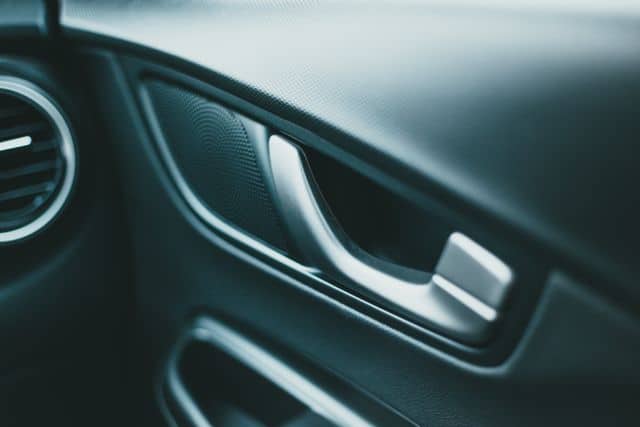
Door latches are usually small, but they are responsible for keeping closed doors closed. Recall Campaign 23V-775 from 2023 details the risk of a component within a latch breaking and making the door difficult to close. In more extreme cases, a broken latch could allow a door to swing open unexpectedly while the vehicle is moving. According to a 2015 advisory, door failures like these can occur during a drive.
Recalls That Show the Pattern
In 2015, Ford recalled 2012-14 Fiesta vehicles along with 2013-14 Fusion and MKZ vehicles. All three models carried the same latch flaw, which is a pawl spring tab that could break and keep the door from latching.
Towards the end of 2019, Volvo revealed more defects, especially for the 2011 to 2017 models of the S60 and V60. Volvo’s recall, acknowledged by NHTSA, brought these issues to the public’s attention and affected over 140,000 cars. It was revealed that a door latch mechanism can fail, leading drivers and passengers to believe a door is securely shut when it is not.
According to Volvo’s recall report to the NHTSA, extended exposure to extremely hot climates can weaken the latch and cause a part of it to break. The report also states that an open-door warning light will illuminate in the driver information display if a door has failed to shut.
In November 2023, Ford informed the NHTSA that they were extending a 2020 recall of latch systems to include an additional 45,173 vehicles. The newly recalled vehicles are the 2015 Ford Fiesta, the 2016 Ford Fusion, and the 2016 Lincoln MKZ. Dealers will examine the date codes on all side door latches, and, if required, they will replace the door latches on all four doors of these vehicles at no charge to the owner.
What Federal Rules Cover
Federal Motor Vehicle Safety Standard 206 describes minimum performance criteria for door locks and door retention components. The test procedure for the standard states that it is designed to help reduce the potential for vehicle occupants being ejected in a crash. It applies to side and rear doors leading to seating areas in passenger cars, multipurpose passenger vehicles, and trucks, as well as buses with a GVWR of 4,536 kg (10,000 lbs) or less.
A recall typically handles problems discovered after vehicles are in service. In the Ford examples, the dealer offered a free repair, which cost the owner nothing, provided the owner knew about the notice. Drivers hurt in a crash tied to a defective latch before a repair is made, including in North Carolina, can seek guidance from a Raleigh car accident lawyer.
What Agencies Tell Owners
The 2015 guidance provided by the NHTSA listed several steps for owners. First, it instructed people to use the vehicle’s recall database to check the VIN and also check mail frequently for notices. The agency also directed owners to never operate a vehicle if its doors were not securely closed, regardless of whether they seemed to be closed. In particular, it warned owners against driving when a passenger held a door shut or secured it with a rope or seat belt.
Recall notices lose their purpose if they are never delivered. Vehicles find new homes, and owners change addresses. This unfortunately means that vehicles with dangerous defects can still be driven long after they are meant to be recalled.
Consumers can easily find out if a vehicle is included in a recall by using the NHTSA recall lookup by vehicle identification number, which takes only a minute.